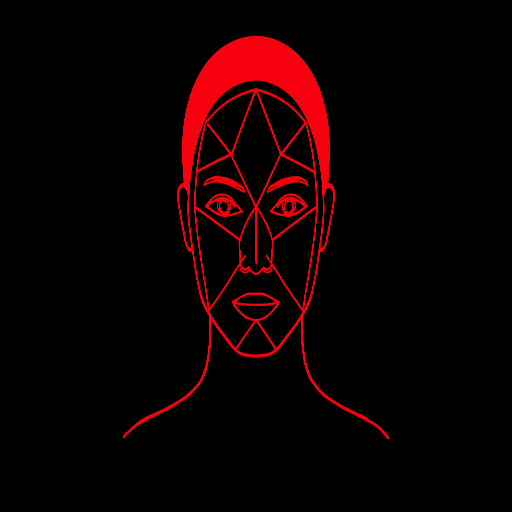
Triangle face shape: features, comparisons and style ideas
Understand a lower face that reads broader than the upper face, how it differs from square, and which styling effects to explore.
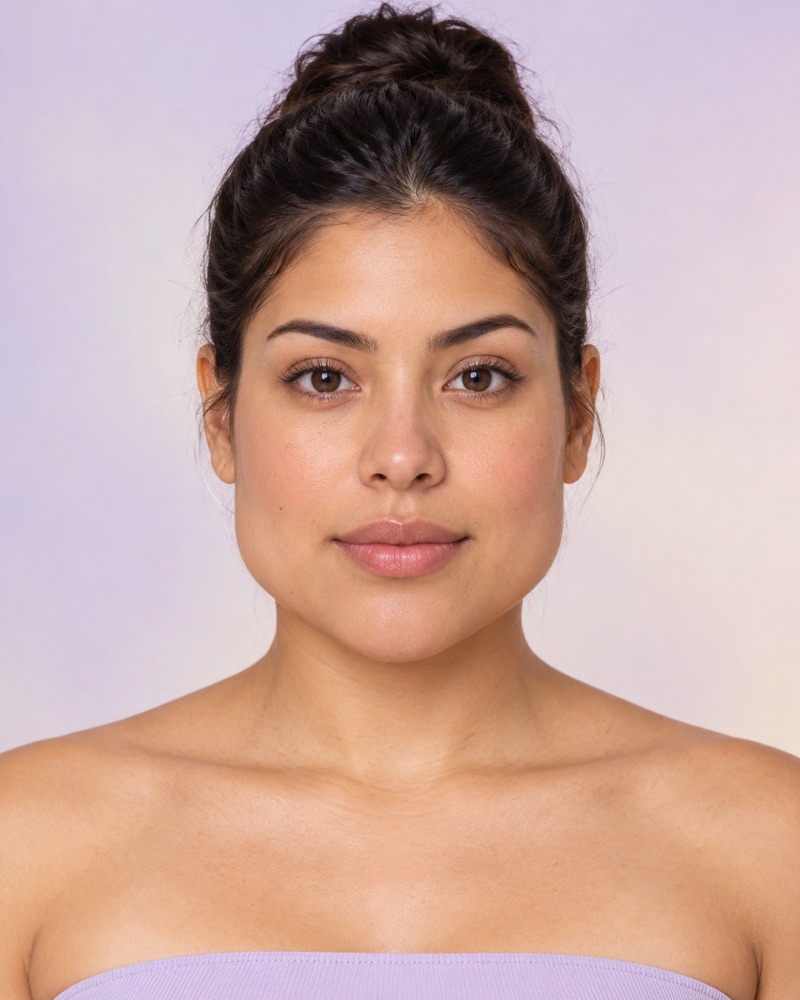
A triangle face-shape profile is widest through the lower face, with a comparatively narrower temple or upper-face area. It is sometimes called pear-shaped. The label describes the direction of the outline, not a perfect geometric triangle.
Three triangle face shape features to compare
Lower width leads
The upper jaw or lower-face area carries more width than the upper contour.
Narrower temples
The outline opens gradually as it moves from the upper face toward the jaw.
Grounded lower outline
The jaw may look defined and visually substantial rather than tapering sharply to the chin.
How triangle face proportions usually read
Triangle is suggested when jaw-related spans are large relative to cheek and upper-face widths. A beard can materially change these visible measurements, so automatic analysis may be describing the beard silhouette rather than the underlying jaw.
Before deciding from a photo
Pull long hair away from the jaw and avoid a low camera angle, which can make the lower face look larger. If facial hair obscures the corners, use the manual quiz as a second opinion.
Use the complete photo checklist →Triangle or Square?
Both can feature a strong jaw. Square keeps the upper face, cheeks and jaw closer in width; triangle grows visibly broader toward the lower face.
Compare the detailed square face shape guide.
The nearby Square profile is usually described as: a square profile combines compact length with relatively even upper-face, cheek, and jaw spans. the lower outline tends to look more defined; styling can soften those angles or make them the focus.
Choose an effect, not a correction
Texture near the temples, a fuller fringe or an emphasized upper frame can draw attention upward. Clean sides and a strong jaw line can instead highlight the lower structure.
‘Add width at the top’ is one optional balancing effect. You can deliberately emphasize the jaw with sleek hair or angular frames if that better matches your taste.
Hairstyle ideas for a triangle face shape
Temple volume
Add width near the upper sides with texture, curls, or layers.
Visual effect: Upper-face presence balances a wider jaw.Textured crown
Use controlled height and movement without shaving sides too tight.
Visual effect: Top detail draws attention upward while retaining useful side width.Full side fringe
A side-swept or layered fringe that opens near the temple.
Visual effect: The diagonal volume broadens the top and softens lower dominance.Hair texture, density, growth direction, climate and maintenance can matter more than face shape. Take references with similar hair to a stylist and ask what the shape looks like without daily heat styling.
Glasses for a triangle face: fit before frame shape
Browline frame
A stronger top rim with lighter visual weight below.
Visual effect: Upper emphasis balances a lower-face-led outline.Lifted cat-eye
A modest outer lift that stays within comfortable temple width.
Visual effect: The upward direction guides focus away from the jaw.Top-heavy rectangle
A defined upper line with softly rounded lower corners.
Visual effect: It adds structure high on the face without repeating the jaw exactly.A frame should remain comfortable at the bridge and temples, sit level and stay clear of the cheeks when you smile. Shape guidance cannot replace an optician’s fit or a prescription.
Beard and makeup options
Beard and facial hair
Tapering the sides of a full beard can reduce extra width at the jaw. Short stubble is a useful low-maintenance alternative.
Keep the widest jaw areas shorter and blend into modest chin length. Reducing side bulk prevents the beard from expanding the jaw further.
Makeup placement
Try a little highlight around the upper cheek and temple. Blend any jaw contour softly rather than drawing a hard edge.
Bring subtle light to the upper cheek and temple area. Upper-face brightness redistributes visual attention.
Useful experiments
- Build controlled width or detail around the temples and crown.
- Choose frames with visual weight along the brow line.
- Taper beard volume at the widest jaw points when desired.
Pause and check
- Ultra-tight temple cuts if you want a broader-looking upper face.
- Bottom-heavy frames that add more emphasis near the jaw.
- Wide, square beard corners when your goal is less lower-face width.
Questions people commonly ask
Is triangle the same as pear face shape?
Many styling guides use the terms interchangeably for an outline that becomes broader toward the jaw.
Can a beard change the detected shape?
Yes. Dense facial hair can hide landmark edges or visually widen the lower face. Compare a clear photo and your own observation.
Which glasses suit a triangle face?
Browline, softly lifted and frames with upper detail are useful starting points, but bridge and temple fit come first.
The descriptions explain this site’s transparent styling profiles. Content uses AI-assisted drafting and software-based checks against the implemented measurement rules; it is not an independent professional review. These are not clinical categories. Read the methodand accuracy limitations before interpreting an automatic result.
Ready to explore your own proportions?
Try the photo analyzer or use the manual calculator. Keep the result in perspective: your style is yours to choose.