Square face shape: features, comparisons and style ideas
Understand even facial widths and a more defined lower outline, with styling ideas that soften or emphasize those angles.
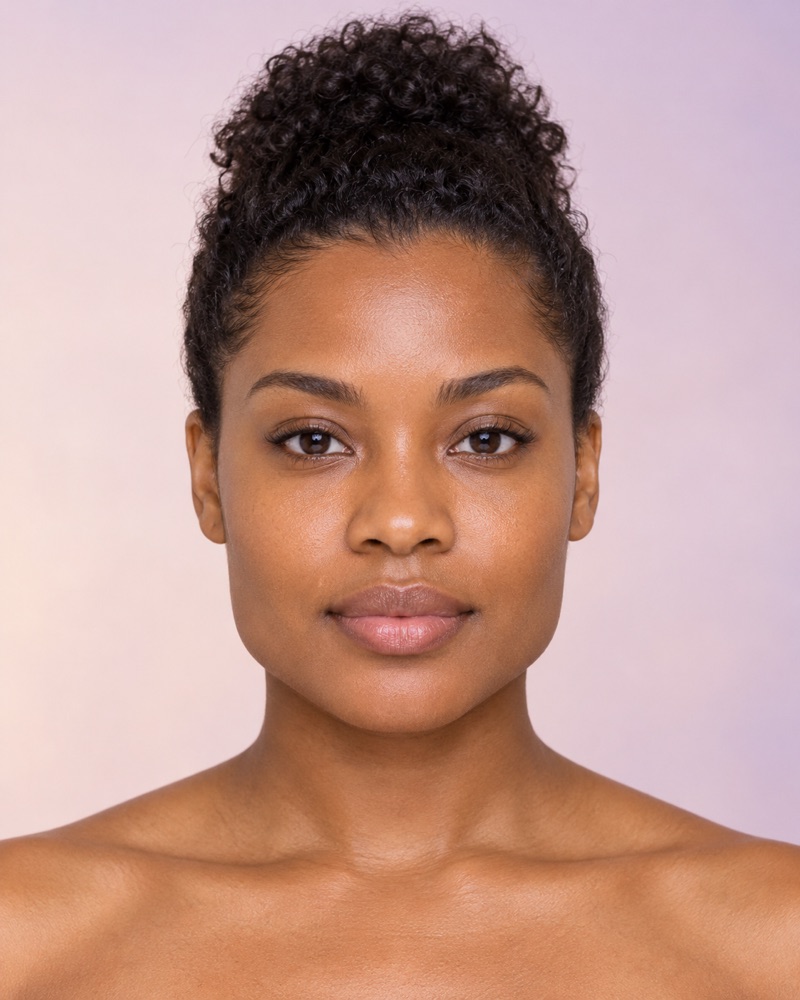
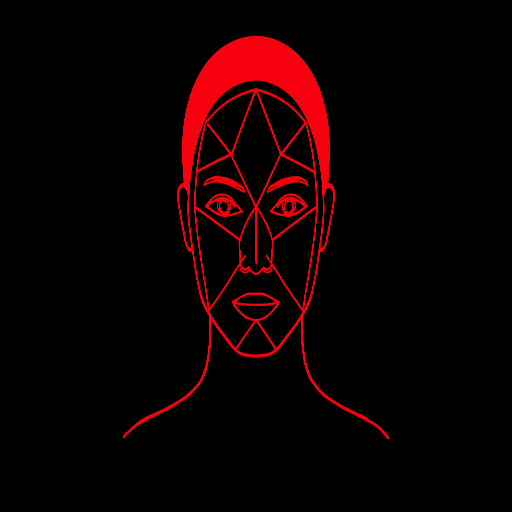
A square face-shape profile combines relatively even widths through the upper face, cheeks and jaw with a compact length. The lower corners usually read more clearly, giving the outline a structured appearance that can be softened or emphasized by styling.
Three square face shape features to compare
Even horizontal spans
Upper face, cheek area and upper jaw appear closer in width than they do in strongly tapered profiles.
Visible jaw corners
The lower outline changes direction more abruptly, rather than forming one continuous curve.
Compact length
Face length is not dramatically greater than the widest visible span.
How square face proportions usually read
Measurements can show similar upper-face, cheek and jaw widths, but a photo classifier also needs lower-contour information. Two faces can share almost identical ratios while one has a curved jaw and the other has straighter corners.
Before deciding from a photo
Hair falling in front of the jaw can make the sides look narrower, while a beard can make the lower outline look wider or more angular. Use an unobscured photo when you want to assess the natural contour.
Use the complete photo checklist →Square or Round?
Both profiles can be compact. Square is suggested by stronger lower corners and relatively parallel side widths; round is suggested by smoother transitions and a softer chin-to-jaw curve.
Compare the detailed round face shape guide.
The nearby Round profile is usually described as: a round profile has similar visible length and width, with softer transitions through the cheeks and jaw. styling can echo that softness or introduce longer, more angular lines.
Choose an effect, not a correction
Waves, curved frames and blended makeup create contrast with a defined jaw. Geometric cuts and angular frames repeat the structure when you want a bolder, graphic effect.
A strong jaw is not something that needs correcting. ‘Softening’ is only one optional visual effect, not the goal of every haircut or frame choice.
Hairstyle ideas for a square face shape
Soft waves
Loose movement with broken-up ends around the jaw and shoulders.
Visual effect: Curved texture creates a gentle contrast with a defined outline.Side-swept layers
An off-center part with layers moving diagonally across the face.
Visual effect: Asymmetry keeps the silhouette from reading as one solid block.Textured top
A crop or quiff with movement above and clean, not severe, sides.
Visual effect: Texture adds height and breaks up equal horizontal widths.Hair texture, density, growth direction, climate and maintenance can matter more than face shape. Take references with similar hair to a stylist and ask what the shape looks like without daily heat styling.
Glasses for a square face: fit before frame shape
Round frame
A medium round or panto lens with enough width at the temples.
Visual effect: Curved rims offer clear contrast with the jaw’s straighter lines.Oval metal frame
A light, slim oval that sits clear of the cheeks.
Visual effect: The reduced visual weight softens rather than duplicates the structure.Curved aviator
A teardrop lens with a comfortable bridge and rounded base.
Visual effect: Its downward curve balances a broad, defined lower face.A frame should remain comfortable at the bridge and temples, sit level and stay clear of the cheeks when you smile. Shape guidance cannot replace an optician’s fit or a prescription.
Beard and makeup options
Beard and facial hair
Try rounded edges at the lower corners if you want a softer silhouette. A close trim can keep your natural angles prominent.
Keep the lower corners softly curved and the side length tidy. It retains definition while taking the sharpest edge off the jaw.
Makeup placement
Blend a small amount of contour around the outer jaw only if you want softer-looking corners. Keep blush placement independent of the label.
Keep edges soft and blend just above the natural cheek hollow. A curved color shape balances straighter facial lines.
Useful experiments
- Choose soft texture when you want contrast with the jaw.
- Use rounder frames that are still wide enough for the temples.
- Keep styling intentionally angular if you enjoy emphasizing structure.
Pause and check
- A blunt, jaw-length cut if you want less focus on jaw width.
- Very boxy frames that exactly repeat every facial line.
- Hard contour stripes—small, well-blended placement is more adaptable.
Questions people commonly ask
Can a square face be longer than wide?
Yes. Real faces do not match perfect geometry. A longer square-like outline may also be described as rectangular or oblong with a defined jaw.
Are round glasses always best for square faces?
They offer contrast, but softly rectangular or geometric frames can be equally effective when they fit well.
Why does the photo tool sometimes say oval?
If lower corners are hidden, the classifier sees a taper instead of jaw angularity. Pull hair back and compare the manual observation tool.
The descriptions explain this site’s transparent styling profiles. Content uses AI-assisted drafting and software-based checks against the implemented measurement rules; it is not an independent professional review. These are not clinical categories. Read the methodand accuracy limitations before interpreting an automatic result.
Ready to explore your own proportions?
Try the photo analyzer or use the manual calculator. Keep the result in perspective: your style is yours to choose.