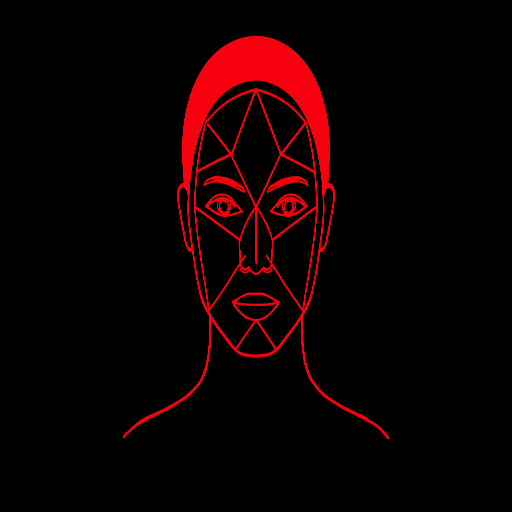
Round face shape: features, comparisons and style ideas
See how compact proportions and a softer jaw can suggest a round profile, plus useful hairstyle, frame and grooming options.

A round face-shape profile usually combines compact visible length with a fuller middle and a lower outline that changes direction softly. It is the relationship between length, width and jaw curvature—not simply having full cheeks—that creates the overall impression.
Three round face shape features to compare
Length and width are close
The visible face does not look dramatically longer than the broad cheek area.
Continuous side curve
The outline moves from cheek to jaw without a pronounced corner or sudden taper.
Soft lower face
The chin and lower jaw tend to read as rounded rather than flat or strongly angular.
How round face proportions usually read
A round profile tends to produce one of the smaller length-to-cheek ratios in a consistent front-facing photo. Upper-face and jaw spans remain fairly close to cheek width, but numbers alone cannot distinguish a soft round jaw from an angular square jaw.
Before deciding from a photo
A close phone selfie can enlarge the cheeks and nose relative to the outside of the face. Step back, use a modest zoom if available, and keep the camera at eye level before deciding that the outline is round.
Use the complete photo checklist →Round or Square?
Round and square profiles can both have similar length and width. The practical difference is the lower outline: round changes direction gradually; square shows clearer corners and straighter jaw segments.
Compare the detailed square face shape guide.
The nearby Square profile is usually described as: a square profile combines compact length with relatively even upper-face, cheek, and jaw spans. the lower outline tends to look more defined; styling can soften those angles or make them the focus.
Choose an effect, not a correction
Use vertical height, diagonal lines or crisp frame edges when you want contrast. Repeat the softness with rounded layers and circular frames when harmony feels more like your style.
Advice to ‘avoid all round frames’ is too rigid. A round frame can look intentional; it only needs to fit the bridge, temples and cheeks properly.
Hairstyle ideas for a round face shape
Textured height
A quiff, lifted crop, or crown volume with tidier sides.
Visual effect: Vertical direction can make the overall silhouette feel longer.Long face-framing layers
Layers that fall below the chin rather than ending at the cheeks.
Visual effect: Longer lines guide the eye downward instead of adding side width.Side-swept fringe
An angled fringe or off-center part with visible asymmetry.
Visual effect: The diagonal line interrupts an evenly rounded outline.Hair texture, density, growth direction, climate and maintenance can matter more than face shape. Take references with similar hair to a stylist and ask what the shape looks like without daily heat styling.
Glasses for a round face: fit before frame shape
Soft rectangle
A defined horizontal frame with corners that are not too sharp.
Visual effect: It adds structure while staying comfortable beside fuller cheeks.Browline frame
A stronger top edge with a lighter lower rim.
Visual effect: The visual weight draws attention upward and adds definition.Geometric frame
A subtle hexagon or upswept shape at proper temple width.
Visual effect: Distinct angles create intentional contrast with soft curves.A frame should remain comfortable at the bridge and temples, sit level and stay clear of the cheeks when you smile. Shape guidance cannot replace an optician’s fit or a prescription.
Beard and makeup options
Beard and facial hair
For a more vertical silhouette, keep the sides tidy and a little more length at the chin. Work with your growth pattern.
Keep cheek volume controlled and leave measured length below. This shifts the beard silhouette from wide to more vertical.
Makeup placement
A slightly upward blush placement can draw the eye toward the temples. Blend in daylight and keep the effect as subtle as you like.
Blend from mid-cheek toward the upper ear in a soft diagonal. The lift adds direction and avoids concentrating color at the widest point.
Useful experiments
- Use vertical texture or an off-center part when you want more length.
- Check that glasses do not rest on the cheeks when you smile.
- Keep contour diffused; structure does not need a hard line.
Pause and check
- Blunt volume ending at the widest cheek point if you want less width.
- Very small circular frames that repeat rather than contrast the outline.
- Heavy beard volume at both sides when your goal is a longer silhouette.
Questions people commonly ask
Do full cheeks always mean a round face?
No. Cheek fullness can appear with oval, heart and diamond outlines. Compare overall length and the jaw transition as well.
Can weight change affect a round result?
Soft-tissue changes may alter visible cheek and jaw contours, but a single category should never be treated as a permanent identity.
Should a round face avoid short hair?
No. A textured crop, pixie or short curls can work well. The placement of volume matters more than a simple length rule.
The descriptions explain this site’s transparent styling profiles. Content uses AI-assisted drafting and software-based checks against the implemented measurement rules; it is not an independent professional review. These are not clinical categories. Read the methodand accuracy limitations before interpreting an automatic result.
Ready to explore your own proportions?
Try the photo analyzer or use the manual calculator. Keep the result in perspective: your style is yours to choose.