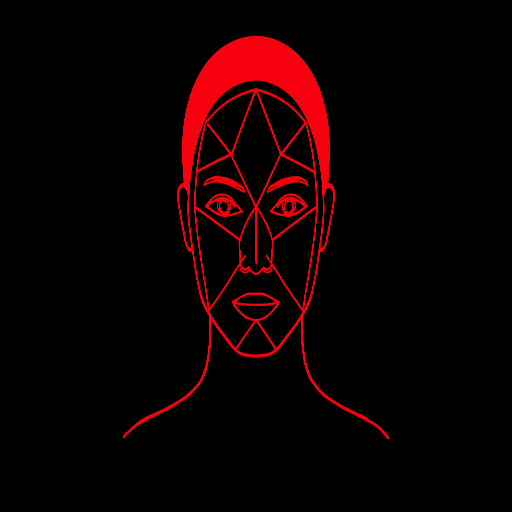
Oval face shape: features, comparisons and style ideas
Learn the visible proportions associated with an oval profile, what it is commonly confused with, and practical hair and glasses ideas.
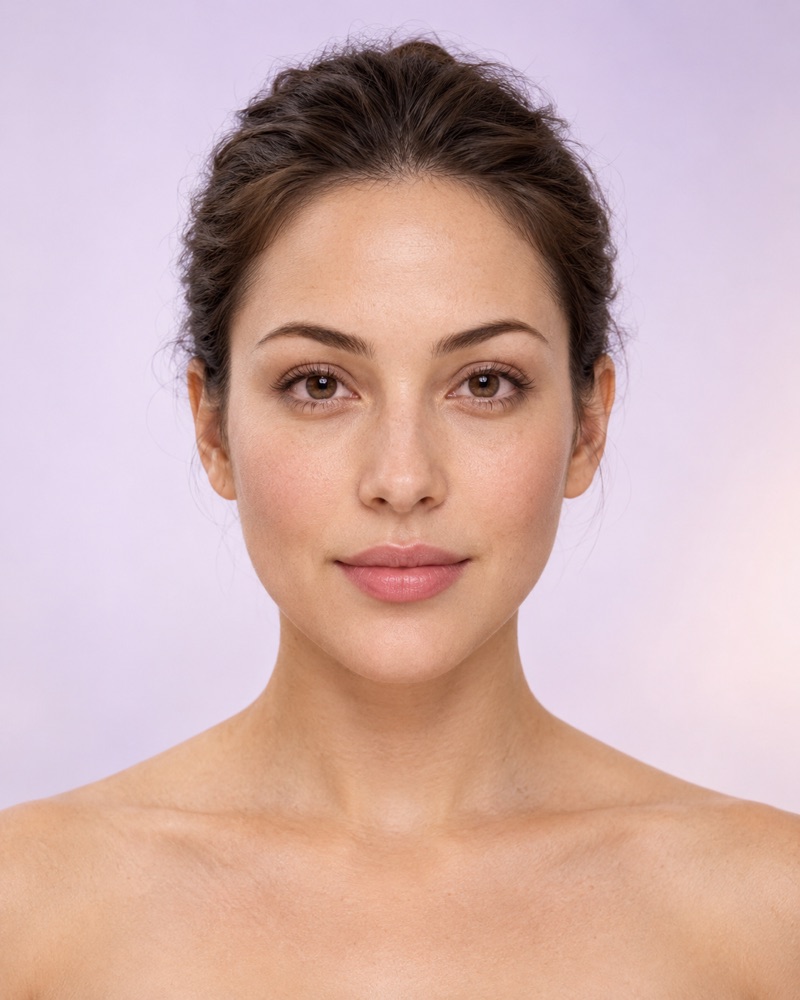
An oval face-shape profile usually reads as moderately longer than wide, with the cheek area leading by a small amount and a lower face that narrows gradually. The word ‘gradually’ matters: an oval outline is defined less by one dramatic feature than by a smooth transition from upper face to chin.
Three oval face shape features to compare
Moderate visible length
The face looks longer than the cheekbone span, but not as vertically dominant as a typical oblong profile.
Cheeks lead slightly
Cheek width is often the broadest span, while the upper face remains close enough to look balanced.
Soft jaw taper
The jaw narrows toward a rounded chin without the strong lower corners associated with a square outline.
How oval face proportions usually read
In a front-facing image, the length-to-cheek ratio is often moderately above 1. The upper face may sit close to cheek width, while the jaw is visibly narrower. Exact numbers vary with camera distance and where each point is placed, so use the relationship rather than one universal cutoff.
Before deciding from a photo
A slightly raised camera can make the jaw look smaller and push an otherwise balanced face toward oval or heart. Keep the lens near eye level and confirm that both ears and both cheek edges appear similarly visible.
Use the complete photo checklist →Oval or Oblong?
Oval and oblong can share a gentle jaw taper. Oblong places more visual emphasis on length and often keeps the sides more parallel. If a second, well-framed photo changes the result between these two, treat both as useful descriptions.
Compare the detailed oblong face shape guide.
The nearby Oblong profile is usually described as: an oblong profile is clearly longer than it is wide, often with upper-face, cheek, and jaw spans that stay relatively steady. styles can add side width or interrupt the vertical line.
Choose an effect, not a correction
Because the outline already looks balanced, styling is less about compensation and more about choosing a focal point. Texture, a distinctive frame or a strong part can all work without needing to ‘correct’ the shape.
‘Oval suits everything’ is a shortcut, not a fit guarantee. Hair texture, frame bridge, temple width, cheek clearance and maintenance still decide whether an option works in real life.
Hairstyle ideas for a oval face shape
Textured crop
Short, movable texture with a natural or slightly off-center finish.
Visual effect: It keeps the outline visible without adding unnecessary height.Shoulder-length layers
Light layers beginning around the cheek or jaw.
Visual effect: They follow the natural taper while adding movement around the sides.Relaxed bob
A chin-to-collarbone bob with soft ends or a side part.
Visual effect: The flexible length works with an already balanced silhouette.Hair texture, density, growth direction, climate and maintenance can matter more than face shape. Take references with similar hair to a stylist and ask what the shape looks like without daily heat styling.
Glasses for a oval face: fit before frame shape
Rounded rectangle
A frame close to cheekbone width with softly squared corners.
Visual effect: It adds definition while preserving the face’s balanced proportions.Classic aviator
A medium-depth aviator with a secure bridge and modest drop.
Visual effect: The tapered lens echoes the lower face without looking too narrow.Subtle cat-eye
A gentle outer lift rather than an exaggerated upsweep.
Visual effect: It gives directional interest while keeping the overall balance intact.A frame should remain comfortable at the bridge and temples, sit level and stay clear of the cheeks when you smile. Shape guidance cannot replace an optician’s fit or a prescription.
Beard and makeup options
Beard and facial hair
A short, even beard keeps the outline visible. Compare a tapered cheek line with fuller sides before committing.
Consistent length through the sides, jaw, and chin. It keeps the natural outline readable and is easy to adjust.
Makeup placement
Follow your cheekbone with a light wash of blush. Add contour only where you want more shadow; no correction is required.
Blend from the apples slightly outward along the cheekbone. It works with the existing balance rather than trying to correct it.
Useful experiments
- Keep one clear focal point: texture, fringe, frame, or makeup.
- Choose frame width by temple comfort and cheek clearance.
- Let natural hair texture guide the final cut.
Pause and check
- Very tall hair plus a long pointed beard if you want less vertical emphasis.
- Frames much wider than the temples, which can slide or overwhelm.
- Treating versatility as a rule—you can still choose strong contrast.
Questions people commonly ask
Can an oval face have a defined jaw?
Yes. Categories overlap. A face can be oval in its overall proportions while still having visible jaw definition.
Is oval the ideal face shape?
No. It is one styling description, not a beauty standard or a better category.
Why do I sometimes get oblong?
A closer camera, a higher forehead landmark or a slightly lifted chin can change visible length. Compare photos taken from the same distance and height.
The descriptions explain this site’s transparent styling profiles. Content uses AI-assisted drafting and software-based checks against the implemented measurement rules; it is not an independent professional review. These are not clinical categories. Read the methodand accuracy limitations before interpreting an automatic result.
Ready to explore your own proportions?
Try the photo analyzer or use the manual calculator. Keep the result in perspective: your style is yours to choose.