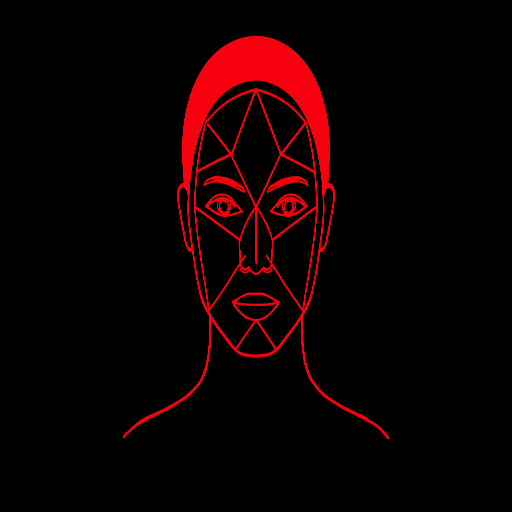
Oblong face shape: features, comparisons and style ideas
Learn how visible length and relatively parallel sides suggest an oblong profile, then explore hair and eyewear proportions.
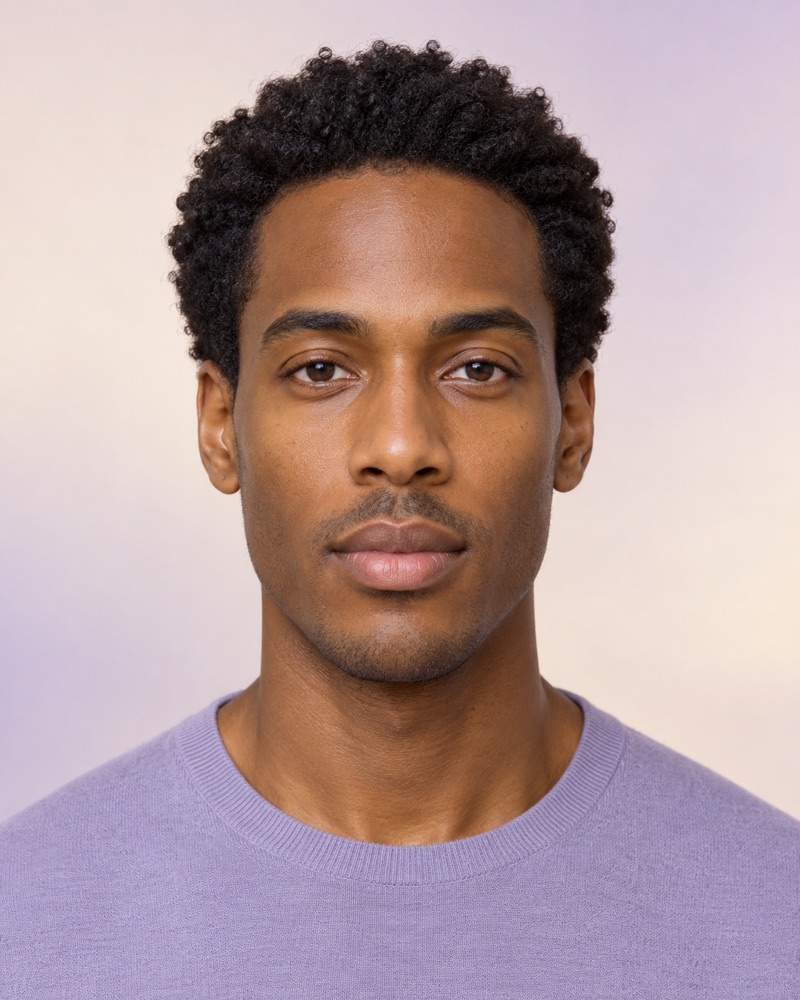
An oblong face-shape profile is defined mainly by visible length. The sides often stay relatively consistent through the upper face and cheek area, while the jaw may be soft or defined. Some style systems use ‘rectangle’ for a more angular version of the same long silhouette.
Three oblong face shape features to compare
Length is the lead feature
The face appears clearly longer than its widest horizontal span.
Relatively parallel sides
Upper-face and cheek widths remain fairly consistent instead of forming a dramatic middle peak.
Flexible jaw character
The lower outline may be rounded or angular; length remains the primary signal.
How oblong face proportions usually read
Oblong usually produces the largest length-to-cheek ratio among the seven profiles. The exact threshold depends on whether the measurement begins at the hairline, an upper-face landmark or the visible top of the forehead.
Before deciding from a photo
Tilting the chin downward or using a camera far above eye level can change the apparent forehead and jaw lengths. Keep the head upright, with a small amount of space above the hair and below the chin.
Use the complete photo checklist →Oblong or Oval?
Both shapes are longer than wide. Oblong puts more emphasis on length and straighter sides; oval has a gentler, more continuous taper and a less dominant vertical proportion.
Compare the detailed oval face shape guide.
The nearby Oval profile is usually described as: an oval profile is longer than it is wide, with the cheek area usually a little broader than the jaw. the outline changes gradually rather than at sharp corners.
Choose an effect, not a correction
Fringe, side volume, deeper lenses and horizontal detail can interrupt vertical length. Extra crown height and a pointed beard can emphasize it if that is the effect you prefer.
A long face does not require ‘shortening.’ Styling advice describes optical direction only; comfort, texture and personal expression remain the real decision criteria.
Hairstyle ideas for a oblong face shape
Textured fringe
A forward, curtain, or side fringe that covers some upper length.
Visual effect: A horizontal break reduces uninterrupted vertical space.Shoulder-length waves
Movement through the sides with controlled crown volume.
Visual effect: Side texture adds width where the profile is comparatively narrow.Full-side crop
A shorter cut that retains some width instead of a severe fade.
Visual effect: Keeping the sides present makes the overall shape feel less vertical.Hair texture, density, growth direction, climate and maintenance can matter more than face shape. Take references with similar hair to a stylist and ask what the shape looks like without daily heat styling.
Glasses for a oblong face: fit before frame shape
Deep rectangle
A frame with generous lens height and a clear horizontal top line.
Visual effect: Lens depth occupies more vertical space and visually shortens the face.Oversized round
A comfortably wide round or panto frame with enough lens height.
Visual effect: The broad curve adds side presence and breaks straight vertical lines.Bold browline
A defined top rim at proper temple width.
Visual effect: The horizontal emphasis creates a useful break across the face.A frame should remain comfortable at the bridge and temples, sit level and stay clear of the cheeks when you smile. Shape guidance cannot replace an optician’s fit or a prescription.
Beard and makeup options
Beard and facial hair
Try fuller sides and a shorter chin if you want less vertical emphasis. Keep the neck line comfortable and easy to maintain.
Retain cheek and jaw density while keeping the chin shorter. Side fullness adds width without extending the lower face.
Makeup placement
A more horizontal blush sweep can emphasize width. Avoid treating facial length as something that must be hidden.
Blend outward across the cheeks rather than sharply upward. Horizontal placement adds a visual width cue.
Useful experiments
- Use fringes, lens depth, or side texture to add horizontal breaks.
- Keep beard length controlled at the chin when balance is the goal.
- Choose enough frame width without creating temple pressure.
Pause and check
- Very high crowns paired with tight sides if you want less length.
- Tiny shallow frames that leave most vertical space uninterrupted.
- Long pointed beards when you prefer a shorter-looking lower face.
Questions people commonly ask
Is oblong the same as rectangular?
They often overlap. ‘Rectangle’ usually implies stronger jaw angles, while ‘oblong’ is often used for a softer long outline.
Can bangs work with an oblong face?
Yes. A fringe can add a horizontal break, but its success also depends on curl pattern, density, growth direction and upkeep.
Why can a close selfie look less oblong?
Wide-angle perspective enlarges central features and can make the cheeks look broader relative to the full length.
The descriptions explain this site’s transparent styling profiles. Content uses AI-assisted drafting and software-based checks against the implemented measurement rules; it is not an independent professional review. These are not clinical categories. Read the methodand accuracy limitations before interpreting an automatic result.
Ready to explore your own proportions?
Try the photo analyzer or use the manual calculator. Keep the result in perspective: your style is yours to choose.