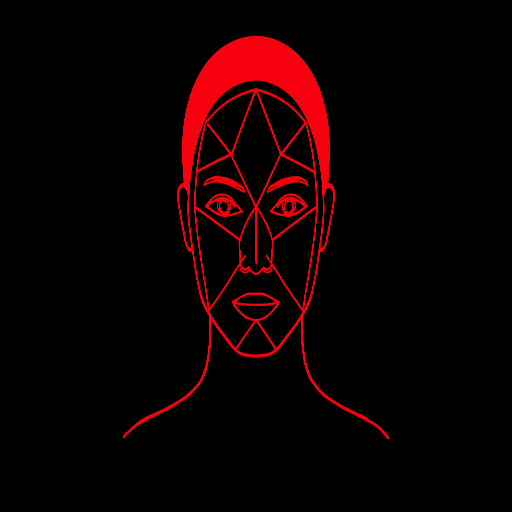
Heart face shape: features, comparisons and style ideas
Explore the broader upper face and narrower lower outline linked with a heart profile, plus balanced styling starting points.
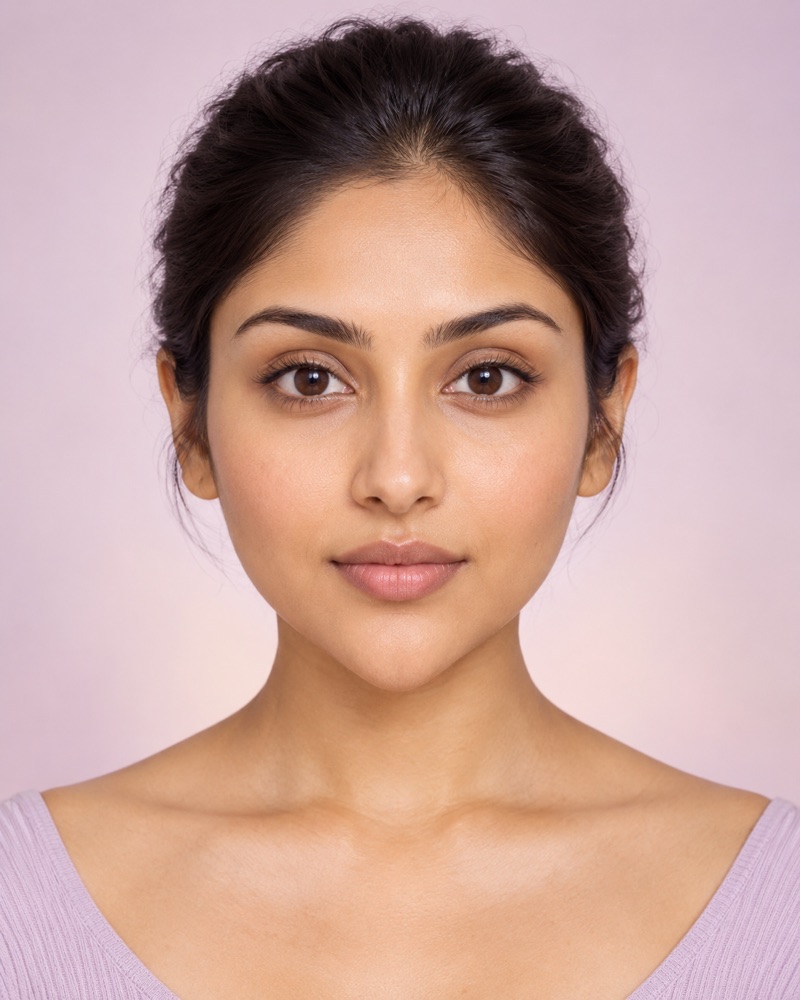
A heart face-shape profile generally carries more visible width through the upper face and cheek area, then narrows toward the lower jaw and chin. The hairline may add a heart-like impression, but it is not required—and a landmark model cannot reliably read it.
Three heart face shape features to compare
Upper face leads
The temple or upper-face area appears broader relative to the lower jaw.
Clear lower taper
The outline narrows from the cheek area toward a smaller jaw and chin.
Cheeks stay present
Cheek width often remains prominent even as the lower face becomes more delicate.
How heart face proportions usually read
A heart profile usually shows an upper-face-to-cheek ratio near the top of the set and a smaller jaw-to-cheek ratio. Hairline width is not measured reliably in a single image, so interpret ‘forehead’ as an upper-contour estimate rather than a true hairline measurement.
Before deciding from a photo
A high camera angle can shrink the jaw and exaggerate the upper face. Check that the eye line is horizontal and that the camera is not looking down before trusting a strong heart result.
Use the complete photo checklist →Heart or Diamond?
Both shapes taper toward the chin. Heart usually keeps more width higher in the face, while diamond places the strongest width at the cheekbones with narrower temples.
Compare the detailed diamond face shape guide.
The nearby Diamond profile is usually described as: a diamond profile is defined by cheekbone width standing out relative to both the upper face and jaw. because that contrast must appear on both sides, it should be a more selective result—not a default for every narrow jaw.
Choose an effect, not a correction
Chin-level texture, lower frame detail and soft side volume can add visual presence lower down. An upswept hairstyle or bold browline frame can instead celebrate the stronger upper shape.
A widow’s peak does not automatically make a heart face, and a straight hairline does not rule it out. Evaluate the visible outline below the hairline as well.
Hairstyle ideas for a heart face shape
Chin-length bob
A bob that gains texture or fullness close to the jaw.
Visual effect: Volume lower down balances a stronger upper face.Side-parted waves
Soft waves beginning near the cheek and carrying through the ends.
Visual effect: The diagonal part softens the top while the ends add lower width.Long layers from the jaw
Keep the crown controlled and start movement lower on the face.
Visual effect: This distributes visual weight toward the narrower half.Hair texture, density, growth direction, climate and maintenance can matter more than face shape. Take references with similar hair to a stylist and ask what the shape looks like without daily heat styling.
Glasses for a heart face: fit before frame shape
Light oval frame
A thin oval or softly rounded frame with modest upper weight.
Visual effect: It avoids adding another strong horizontal line across the forehead.Bottom-accent frame
A frame with subtle color or shape through the lower rim.
Visual effect: Lower detail visually supports the finer jaw and chin.Balanced aviator
A gentle teardrop lens that is not much wider than the face.
Visual effect: The lower lens volume echoes the face’s downward taper.A frame should remain comfortable at the bridge and temples, sit level and stay clear of the cheeks when you smile. Shape guidance cannot replace an optician’s fit or a prescription.
Beard and makeup options
Beard and facial hair
A little fullness around the jaw can broaden the lower outline. Avoid forcing a style where your beard naturally grows sparsely.
Keep useful density at the sides of the jaw and under the chin. Lower fullness can visually balance the broader upper face.
Makeup placement
Try blush across the outer cheeks, blending gently toward the temples. A softer highlight can keep attention evenly distributed.
Place color softly across the outer cheek instead of very high. This keeps visual weight from collecting only near the temples.
Useful experiments
- Place some hair volume or texture around the jaw and collarbone.
- Compare lighter top rims with frames that carry detail below.
- Use lower-face color or grooming when you want more visual balance.
Pause and check
- Very heavy crown volume if you want less upper-face emphasis.
- Oversized brow-heavy frames that sit wider than the temples.
- Removing all width around the jaw when balance is your goal.
Questions people commonly ask
Is heart the same as inverted triangle?
The terms overlap in many style systems. ‘Heart’ often implies a softer or more tapered chin, while inverted triangle can describe a straighter lower outline.
Do I need a widow’s peak?
No. Hairline shape can reinforce the label but is not a requirement.
Can a heart face have wide cheekbones?
Yes. The useful question is whether the upper face stays broad or the cheeks become the clearly dominant span.
The descriptions explain this site’s transparent styling profiles. Content uses AI-assisted drafting and software-based checks against the implemented measurement rules; it is not an independent professional review. These are not clinical categories. Read the methodand accuracy limitations before interpreting an automatic result.
Ready to explore your own proportions?
Try the photo analyzer or use the manual calculator. Keep the result in perspective: your style is yours to choose.