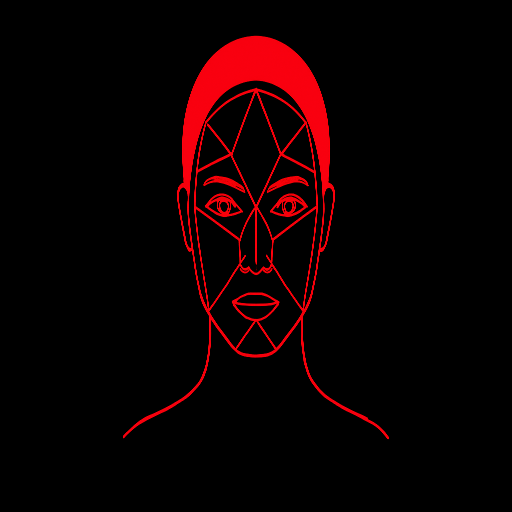
How to Find Your Face Shape at Home (And Why It Actually Matters)

Let's be honest — most of us have stood in front of a mirror at some point trying to figure out if we have an oval face, a round face, or something else entirely. Maybe you were shopping for glasses. Maybe a hairdresser asked and you just nodded along, secretly clueless.

You're not alone. Face shape is one of those things nobody really teaches us. But once you know yours? Everything clicks. The right haircut. The perfect glasses frame. Even the best makeup techniques for your features.

In this guide, we're going to walk you through how to find your face shape — step by step, at home, with nothing but a mirror and maybe a measuring tape. Let's do this.


Why Knowing Your Face Shape Is a Game-Changer

Think about the last time a hairstyle looked incredible on someone but fell completely flat when you tried it. Or glasses that looked stunning in a magazine but awkward on your face. That's the face shape problem in action.

Your face shape determines which styles, frames, and even makeup techniques suit you best. It's not about fitting a mold — it's about understanding your natural geometry so you can work with it, not against it.

Here's what knowing your face shape helps with:

        Choosing the most flattering haircut or hairstyle

        Picking glasses and sunglasses frames that balance your features

        Applying contouring and blush in the most effective way

        Finding beard styles that enhance your jawline (for men)

        Understanding which accessories complement your bone structure

The 7 Main Face Shape Types

Before we get into measuring, let's quickly cover the main categories. Most faces fall into one of these seven shapes:

        Oval — Forehead slightly wider than the jaw, face length about 1.5x the width

        Round — Similar width and length, soft curves, no sharp angles

        Square — Strong, angular jawline, nearly equal width at forehead, cheeks, and jaw

        Heart — Wider forehead, narrow chin, often with a widow's peak

        Diamond — Narrow forehead and jaw, widest at the cheekbones

        Oblong/Rectangle — Longer than it is wide, with a fairly uniform width

        Triangle — Narrow forehead, wider jaw and chin area

Don't panic if you're not sure which one fits you yet. That's exactly what the next section is for.

How to Measure Your Face Shape at Home

You don't need anything fancy for this. A soft measuring tape (the kind used in sewing) is ideal, but you can also use a piece of string and then measure that against a ruler. Here's what to measure:

Step 1: Measure Your Forehead Width

Place the tape measure across your forehead at its widest point — this is usually about halfway between your eyebrows and your hairline. Write down this number.

Step 2: Measure Your Cheekbone Width

Start at the pointy part of your cheekbone (just below the outer corner of your eye) and measure across to the same point on the other side. This is your cheekbone width.

Step 3: Measure Your Jawline Width

Measure from the tip of your chin to the angle of your jaw (the corner where your jaw turns upward), then double that number. This gives you your total jaw width.

Step 4: Measure Your Face Length

Measure from the center of your hairline straight down to the tip of your chin. This is your face length.

How to Read Your Measurements

Now compare your four numbers. Here's the cheat sheet:

        Oval: Face length > face width, forehead slightly wider than jaw, jaw is rounded

        Round: Face length ≈ face width, cheeks are the widest part, soft jaw

        Square: Forehead ≈ cheekbones ≈ jawline, jaw is angular and strong

        Heart: Forehead > cheekbones > jaw, chin comes to a point

        Diamond: Cheekbones > forehead ≈ jaw, narrow at both top and bottom

        Oblong: Face length noticeably greater than width, all measurements fairly similar

        Triangle: Jaw > cheekbones > forehead

The Mirror Method (No Measuring Needed)

Not a fan of measurements? Fair enough. Here's a quicker visual method that works surprisingly well.

Stand in front of a mirror. Use a dry-erase marker or a lipstick to trace the outline of your face directly on the glass. Step back and look at the shape you've just drawn.

Does it look like a perfect circle? That's round. More like an egg shape? Oval. Do the sides go straight down and the jaw looks square? That's a square face. You get the idea.

Some people find this even more revealing than measurements because you're seeing the whole picture at once rather than comparing individual numbers.

What If You're Between Two Face Shapes?

Here's something the internet doesn't tell you often enough: most people don't fit perfectly into one category. And that's completely normal.

Maybe your measurements say oval but your jaw feels a bit square. Or you're round-ish with softer cheekbones. Face shapes exist on a spectrum, and many people are a blend of two.

In that case? Look at your most dominant features. If your jaw is the thing that stands out most, you likely lean square. If your face is notably longer, you're probably oblong. Focus on your strongest features rather than forcing yourself into a single box.

Face Shape vs. Face Structure: A Quick Note

It's worth clarifying: face shape and facial bone structure are related but not the same thing. Your face shape is the overall outline of your face. Your bone structure refers to the underlying skeleton — things like a prominent brow bone, high cheekbones, or a defined jawline.

Both matter when it comes to styling decisions, and understanding one helps you understand the other. But for everyday purposes — hairstyles, glasses, makeup — knowing your face shape is the more practical starting point.

Using an AI Face Shape Detector

If all of this feels like too much effort, here's good news: AI face shape detection has become remarkably accurate. Modern face shape analyzer tools can look at a photo of your face and identify your face shape in seconds.

Most of these tools use facial landmark detection — mapping specific points on your face like the corners of your eyes, the tip of your nose, and the outline of your jaw — to calculate proportions and classify your face shape automatically.

These tools are great for a quick answer. Just keep in mind that lighting, camera angle, and photo quality can affect results. For the most accurate reading, use a front-facing photo in good natural light with your hair pulled back.

Quick Tips for Each Face Shape

Oval Face

Lucky you — the oval face is considered the most versatile. Almost any hairstyle, glasses frame, or makeup look works well. Experiment freely.

Round Face

Go for styles that add length and definition. Long layers, angular glasses frames, and contouring along the sides of the face all work brilliantly.

Square Face

Soften your angles with rounded glasses frames, side-swept bangs, and lighter contouring at the temples and jaw.

Heart Face

Balance your wider forehead with styles that add volume at the chin level. Chin-length bobs and round or oval glasses are your friends.

Diamond Face

Your cheekbones are your best feature — highlight them. Oval or cat-eye glasses and hairstyles with volume at the forehead and chin work beautifully.

Frequently Asked Questions

Can my face shape change over time?

Yes, it can — gradually. Weight changes, aging, and even dental changes can affect the perceived shape of your face. Your bone structure stays the same, but soft tissue and fat distribution shifts over time.

Is oval really the 'best' face shape?

It's often described as the 'ideal' because styles designed for other shapes typically aim to create the proportions of an oval. But every face shape is beautiful — knowing yours just helps you work with your natural features more effectively.

Can I find my face shape from a selfie?

Yes — a front-facing photo with your hair pulled back and in good lighting is actually perfect for face shape analysis, both visual and AI-based.

What if my face is asymmetrical?

Nearly all human faces have some degree of asymmetry. For face shape purposes, focus on the overall outline and general proportions rather than perfect symmetry. Work with your dominant measurements.

Do men and women have different face shape categories?

The categories are the same, but styling advice differs. Men tend to focus on haircut and beard recommendations, while women commonly apply face shape guidance to hairstyles, makeup, and eyeglass frames.

Conclusion: Your Face Shape Is Your Styling Superpower

Knowing your face shape isn't about fitting into a box — it's about gaining insight into what works naturally for your features. Once you have that knowledge, choosing a hairstyle, picking out frames, or applying makeup becomes so much more intuitive.

Take ten minutes to measure or do the mirror method today. Or snap a photo and run it through an AI face shape detector for an instant result. Either way, the knowledge you gain is genuinely useful — and you might just find that your next haircut is your best one yet.

Ready to go deeper? Explore our guides on the best hairstyles for every face shape, how to choose glasses based on your face shape, and more.

Post a Comment

0 Comments