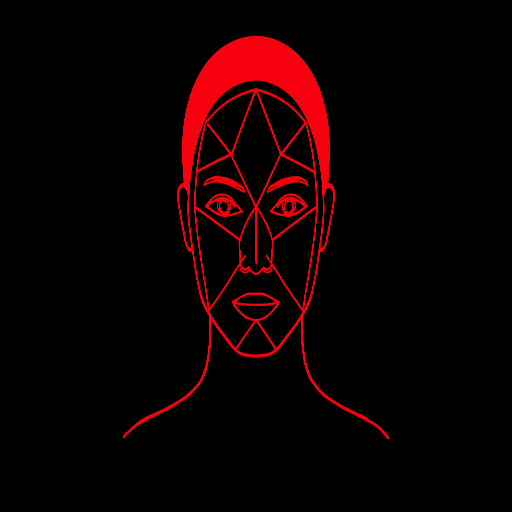
How to measure your face shape: widths, length and ratios
Learn how to measure projected widths, compare ratios and avoid the most common face-measurement mistakes.
Measure a consistent view
Choose a front-facing image taken from a comfortable distance, with the camera near eye level. Keep your expression relaxed. If one ear is much more visible than the other, your head may be turned. A close, wide-angle selfie can make the center of the face look larger relative to its edges.
For the manual calculator, you can measure on a printed photo or use a ruler against a displayed image. The unit can be millimeters, centimeters, or image pixels; consistency matters more than the unit because the calculator uses ratios.
Four spans, one reference
| Span | Where to measure | Common mistake |
|---|---|---|
| Length | Visible upper forehead to the bottom of the chin | Mixing hairline length with a model landmark span |
| Upper face | Between temples above the outer eyebrows | Measuring hair volume instead of the face |
| Cheekbones | Across the broad visible cheek area | Using eye spacing as cheek width |
| Jaw | Straight between jaw corners | Following the jaw curve or doubling a chin-to-ear length |
Read the ratio, not a ranking
Suppose the visible length is 18 units and cheekbone width is 14 units. The length-to-cheek ratio is 18 ÷ 14 = 1.29. That only says this projected span is about 29% longer than the other span. It is not a beauty score, and there is no universally ideal ratio that everyone should aim for.
The other ratios divide upper-face width and jaw width by cheekbone width. Values close to 1 mean those spans are similar in the image. A value below 1 means a span is narrower. Small changes near a threshold can change the suggested category.
Why photo and manual results can disagree
The automatic tool measures landmarks 10–152, 21–251, 234–454, and 172–397 after accounting for image width and height. A manually chosen point may not fall at exactly the same place. The model’s upper forehead point does not reliably identify your hairline, and a beard can obscure the jaw.
Repeat the measurements on the same image once, then compare a second well-lit photo. If the result changes, keep both nearby categories in mind. The manual calculator and shape comparison are designed for this exploration.
Ready to explore your own proportions?
Try the photo analyzer or use the manual calculator. Keep the result in perspective: your style is yours to choose.